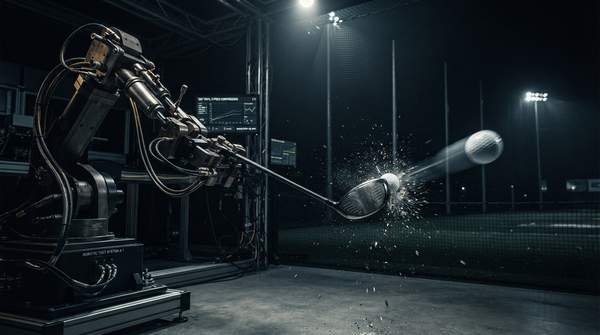
If you swing a driver around 93 mph and care mostly about stopping the ball on the green, the robot test data points toward a high-compression, multi-layer ball. If raw carry off the tee is your priority, a 2-piece distance ball still wins. That is the whole decision in one sentence, and the numbers behind it are more modest than most marketing would suggest: a few yards of carry one way, a few hundred rpm of short-game spin the other.
The Core Trade-Off: Distance vs. Control
Every golf ball purchase is really a bet on where you want to save strokes. Construction and compression determine how that bet pays out. A ball's compression rating influences how much it deforms at impact and, as Snell Golf's guide explains, how much ball speed and spin are generated. A high compression ball needs high swing speed to achieve optimal distance, while a low compression ball compresses more easily for slower swings.
The trade-off shows up most clearly in the short game. Multi-layer balls with soft covers trade a little tee-to-green efficiency for stopping power near the green, while simpler 2-piece constructions flatten that curve in the opposite direction. Golden Oaks' guidance for club golfers frames the choice in the same terms: if you prioritize distance, look for a ball designed for maximum carry; if you value control and feel, consider softer covers and multiple layers.