Video Assistant Referee, or VAR, is a match official with independent access to match footage who may assist the on-field referee only when a clear and obvious error or a serious missed incident has occurred, and only within a short list of match-changing situations. Under the protocol written by the International Football Association Board (IFAB), the governing body for the Laws of the Game, the referee's original decision stands unless the video evidence clearly shows it was wrong — and the final decision, in every case, belongs to the referee on the pitch, not the screen.
Understanding VAR: Core Principles and Purpose
The system's overarching aim, as FIFA describes it, is to help referees make the best possible decisions on the field of play. A dedicated team of video match officials works from a video operation room and can speak directly with the referee through an audio communication system. That team continuously monitors the match, checking every key incident that falls within the reviewable categories without interrupting play.
Several principles anchor the IFAB protocol. First, the referee must always make a decision — a referee is not permitted to give "no decision" and then defer to the VAR, though a decision to allow play to continue after an alleged offence can itself be reviewed. Second, the original decision will not be changed unless the video review clearly shows it was a clear and obvious error. Third, only the referee can initiate a review; the VAR and other match officials can only recommend one. And there is no time limit for the review process, because, in the protocol's own terms, accuracy is more important than speed.
The Four Match-Changing Incidents VAR Can Review
The IFAB protocol limits VAR assistance to four categories of match-changing decisions: goal or no goal, penalty or no penalty, direct red cards (not including a clearly incorrect second caution), and mistaken identity, which arises when the referee cautions or sends off the wrong player from the offending team. Reviews can also cover offences in the build-up to a goal or penalty, not just the decisive moment itself.
FIFA's description of the system adds a fifth, optional category: clearly incorrectly awarded corner kicks, but only where the decision can be changed immediately and without delaying the restart. FIFA identifies this as a competition option, one it says will be in use at the FIFA World Cup 2026. Some competitions also distinguish certain calls as factual matters rather than judgment calls — the Premier League's guidance, for instance, lists factual offside, whether a foul was committed inside or outside the penalty area, and mistaken identity among such decisions.
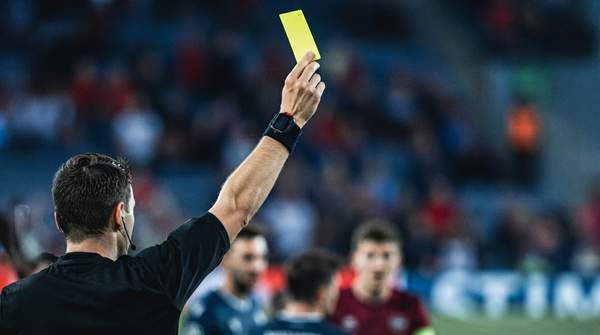
The practical consequence for fans is straightforward: a spectacular tackle, a disputed throw-in or an ordinary yellow card generally cannot trigger a VAR intervention on its own, no matter how loudly the stadium complains. The system is deliberately narrow, and that narrowness is where most arguments about VAR begin.