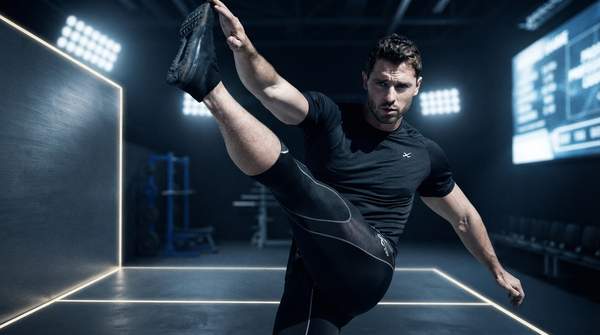
The most effective way to use athletic compression gear is to pick your goal first — performance support during activity, faster recovery afterward, or injury management — and then match the gear type, pressure level, and timing to that goal. That matters because the evidence is uneven: recovery benefits are reasonably supported, while claims that compression directly boosts performance remain mixed and inconclusive. Here is how to choose.
Understanding Athletic Compression Gear
Athletic compression garments — socks, sleeves, shorts, and tights — apply moderate pressure, typically around 15–20 mmHg, and are designed for movement rather than medical treatment. According to compression-wear maker CW-X, their focus is improving performance, reducing muscle fatigue, and supporting injury prevention through enhanced circulation, with construction that preserves a full range of motion. This distinguishes them from medical-grade compression, which is produced under stricter specifications and often requires professional fitting. Princeton Sports and Family Medicine notes that athletes can customize their approach across different garment types and compression levels based on their specific needs and preferences.
Performance Enhancement During Activity
Worn during training, compression socks or sleeves are promoted to improve circulation and reduce muscle fatigue, particularly in endurance sports like running, cycling, or long-distance swimming. But the science here is genuinely equivocal. Anderson Powerlifting's review of the research reports that compression garments have shown no impact on runners' speed or endurance, and that evidence for joint and ligament support is "mixed and not definitive." Sportsmith's analysis adds a nuance: appropriately pressured garments may reduce muscle oscillation, which could aid recovery of muscle function after eccentric-heavy exercise such as downhill running or plyometrics, and may improve joint proprioception. One cited study even found medium-pressure lower-body garments impaired exercise-induced performance decrement during prolonged running. The honest takeaway: wear them if they feel supportive and comfortable, not because they guarantee faster times.