NBA teams use the G-League for three distinct strategic purposes: assigning young players for long-term development, filling up to three extra roster spots with two-way contracts, and sending injured players on rehabilitation assignments. Each mechanism carries its own rules under the Collective Bargaining Agreement, and understanding which one applies explains why a given player is in the minor league — and what his parent club is actually trying to accomplish.
The G-League's Strategic Importance in Modern NBA Team Building
The NBA describes its G-League as the league's official minor league, one that prepares "players, coaches, officials, trainers, and front-office staff for the NBA while acting as the league's research and development laboratory." As of the 2026-27 season, the league features 31 teams, 30 of which are affiliated with an NBA franchise. That near-complete affiliation map is what makes the strategic uses possible: nearly every NBA team controls a professional environment where it can place players without releasing them. For front offices, the affiliate functions less like a farm system in the baseball sense and more like an extension of the NBA roster itself — a place where contract rules, salary cap math, and medical strategy all intersect.
Player Development: Nurturing Future NBA Talent
The core development tool is the assignment. Under Article 41 of the NBA's Collective Bargaining Agreement, a team may at any time assign a player on its Active or Inactive List to its G-League affiliate, provided the player has zero, one, or two years of service at the time of the assignment. Veterans with more than two years of service can also be assigned, but only with the written consent of both the player and the Players Association.
The strategic value is straightforward: a young player stuck at the end of an NBA bench gets real minutes in a professional system rather than practice reps alone. The CBA treats G-League work as playing "for the Team" — any practice or game during an assignment counts under the player's Uniform Player Contract, and the affiliate may release medical information about an assigned player just as an NBA team would. The player remains under NBA contract throughout, so the club risks nothing in terms of rights while the prospect develops.
Roster Flexibility: The Power of Two-Way Contracts
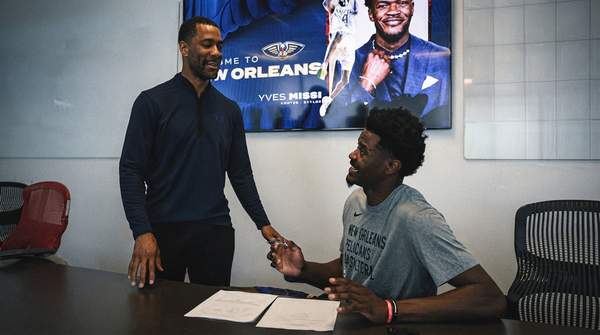
Two-way contracts are the most consequential roster-management tool the G-League enables. Under the rules in effect for the 2025-26 season, each NBA team may carry up to three players on two-way contracts in addition to its maximum 15 players on standard NBA contracts. Only players with three or fewer years of NBA service are eligible, and the deals run one or two seasons as negotiated. They may not be signed after March 4 of any season.
The financial mechanics drive the appeal. Players on two-way deals are paid one salary covering their time in both leagues — half the value of a rookie minimum salary, which Eric Pincus of Sports Business Classroom pegs at $636,435 for the 2025-26 season, pro-rated by signing date. Two-way players are limited to 50 games on an NBA active list and are not playoff-eligible unless converted to a standard contract before the team's last regular-season game. Reporting by Jasmyn Wimbish at CBS Sports notes that the structure lets teams protect up to three players who are otherwise off-limits to other clubs — a provision that became part of the CBA in 2017 and, per the 2023 agreement, expanded to a third spot.