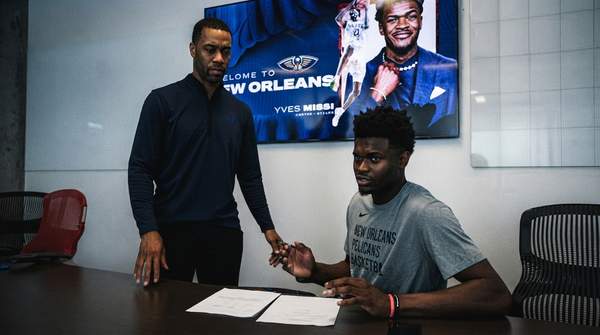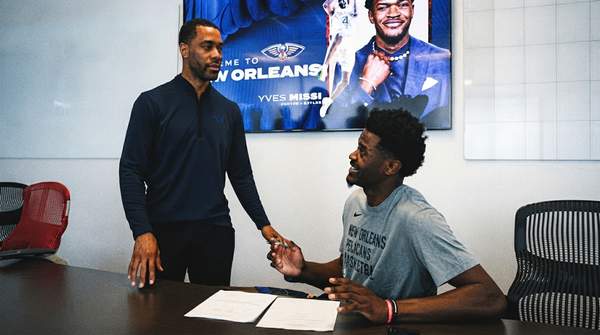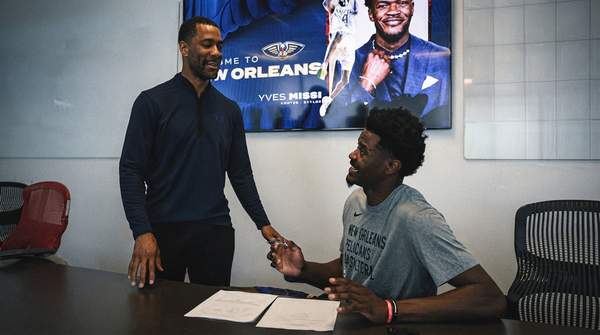
Under the NBA's current Collective Bargaining Agreement, a two-way contract lets each team carry up to three extra players beyond its 15-man regular season roster, paying them a flat rate equal to half the rookie minimum salary — $278,898 for the 2025-26 season — while capping them at 50 active NBA games and barring them from playoff participation unless their deal is converted to a standard contract. The contracts, first introduced in the 2017 offseason, are reserved almost entirely for players in their fourth NBA season or earlier, with a narrow exception for veterans who missed a full season to injury.
Understanding those boundaries is essential to reading roster moves, because a two-way slot is simultaneously a development tool, a cheap cap-exempt roster asset, and a set of hard limits on what a player can contribute in the regular season and postseason.
Understanding NBA Two-Way Contracts: A Strategic Overview
The NBA created two-way contracts in the 2017 offseason, expanding rosters from 15 to 17 players by adding two dedicated slots for players who would spend the bulk of the season in the G League, according to the NBA G League's official explainer. The 2023 Collective Bargaining Agreement added a third two-way spot, a change Eric Pincus of Sports Business Classroom describes as giving teams the means to develop players with fewer than four years of experience who shuttle part-time between the G League and the NBA.
The mechanics are straightforward in outline: a two-way player remains under team control and, as Luke Adams of Hoops Rumors notes in his contract tracker, cannot be poached by rival franchises while bouncing between the NBA and its development league. That control is the strategic core of the arrangement. A team gets an 18th, 19th or 20th body for practice depth, injury insurance and G League development, at a fraction of a standard roster salary and without the salary cap consequences of a conventional deal.
Two-way contracts can run for either one or two seasons, per the G League's summary, and Pincus reports the same two-year maximum. They are, by design, a bridge: a low-cost audition that can end in a standard NBA contract if the player performs, or in a quiet waiver transaction if he does not.
NBA Two-Way vs. Standard Contracts: A Side-by-Side Comparison
The clearest way to see what a team gains and gives up with a two-way deal is to place it directly against a standard NBA contract. The table below juxtaposes the two contract types across the dimensions that matter most for roster construction: how many players a team can carry, what they are paid, how much they can play, and whether they count when the games matter most.
| Dimension | Two-Way Contract | Standard NBA Contract |
|---|---|---|
| Roster spots per team | Up to three two-way players, in addition to the 15-player regular season roster (third spot added by the 2023 CBA) | Counts against the 15-player regular season roster |
| Salary structure | Flat rate equal to 50% of the rookie minimum — $278,898 for 2025-26 — pro-rated for in-season signings; not counted against the team's salary cap | Salaries start at the full rookie minimum and scale upward with experience and negotiation |
| Active game limit (regular season) | Eligible to be active for a maximum of 50 of the team's 82 regular season games (also pro-rated) | No stated active-game limit during the regular season |
| Playoff eligibility | Not playoff-eligible unless the deal is converted to a standard contract | Eligible for playoff participation |
| Player eligibility (years of service) | Players in their fourth NBA season or earlier (three or fewer years of service), with an injury exception allowing certain four-year veterans | No stated years-of-service restriction |
| Contract duration | One or two seasons | Varies by negotiation |
| Salary guarantee threshold | Up to half of base compensation ($318,218 for 2025-26) guaranteed if not waived by the first day of the regular season; full remaining salary guaranteed if not on waivers by January 7 ahead of the January 10 cut-down date | Guarantee terms set individually in the contract |
Read side by side, the trade-offs are explicit. The team buys flexibility and cost control — three extra players, cap-exempt salaries, no obligation beyond a modest guarantee — and in exchange accepts a 50-game ceiling on availability and a postseason ineligibility that only a conversion to a standard deal can cure. The standard contract column, by contrast, carries no stated game limit, no service-time ceiling and full playoff availability, which is precisely why teams reserve it for players they trust in April.
Financial Mechanics of Two-Way Deals
The headline number understates the structure. The G League's official summary sets the annual two-way salary at 50% of the NBA minimum applicable to a player with zero years of service — $636,435 for 2025-26, meaning a two-way player earns $278,898. If the contract is signed during the regular season, that amount is prorated based on the number of days remaining, so a November signing pays less than a full-season deal.
Guarantees are where the real financial management happens. A two-way contract can guarantee up to half of the base compensation, specifically $318,218 for the 2025-26 season, if the player is not waived by the first day of the regular season, and that players signed in-season can have up to half of their pro-rated amount guaranteed. Absent those negotiated guarantees, the default protection is minimal: no more than $85,300 guaranteed for 2025-26, with a projected $92,000 for 2026-27.
The calendar drives the rest. The cut-down date is January 10, but a player must actually be placed on waivers by January 7; otherwise the full remaining salary becomes guaranteed. Players signed after that point, Pincus notes, may carry a non- or partially guaranteed pro-rated salary that is functionally guaranteed because the cut-down window has already closed. The final deadline to sign any player to a two-way contract is March 4, closing the acquisition window entirely for the season.
Player Eligibility for Two-Way Contracts
The baseline rule, stated by the G League, is that only players in their fourth NBA season or earlier can sign two-way contracts — equivalently, players with three or fewer years of NBA service, as the current collective bargaining agreement specifies. That ceiling exists because the contract type is designed for development, not as a discount vehicle for established veterans.
The 2023 CBA carved out one narrow exception, which Adams documented at Hoops Rumors in the context of then-eligible big man Harry Giles: a player with four years of NBA service who missed one or more of those seasons due to injury can sign a two-way contract, but only if all of the following criteria are met. The player must have exactly four years of NBA experience — Adams gives the counterexample that a five-year veteran who missed two full seasons to injury would not qualify. He must not have appeared in any regular season or playoff games during the injury year. He must have been on a team's roster for the entire regular season during that injury year. And he must be signing a one-year two-way contract.
The exception is deliberately tight. It rewards teams for staying connected to injured players and gives those players a re-entry path, but it does not open the two-way market to the broader veteran class. For roster analysts, the practical test is simple: count the service years, and if the answer is four, check whether one of them was a fully missed injury season spent on a roster.
Strategic Implications for Teams and Players
For teams, the two-way slot is the cheapest roster experimentation available. Three extra players, paid a cap-exempt half-rookie minimum with limited guaranteed money, provide G League development minutes, NBA practice depth and a 50-game active window for evaluation — all while remaining under team control and unavailable to rival franchises. The cost of that flexibility is equally concrete: a two-way player cannot be active beyond 50 regular season games and cannot appear in the playoffs at all unless converted, so a team relying on a two-way player for real rotation minutes is running out a clock.
For players, the deal is a structured audition. The salary is modest by NBA standards, but the contract is a documented pathway: teams can convert a two-way deal to a standard contract when a player performs, and the one-or-two-season term keeps the incentive aligned. The January 7 waiver deadline and January 10 cut-down date are the decision points where a team either commits guaranteed money or moves on, and the March 4 signing deadline marks the last chance to add to the developmental pipeline in a given season.
Strategic Decision-Making with Two-Way Contracts
Front-office personnel and dedicated fans should evaluate player potential and roster needs against the specific rules of two-way contracts, particularly regarding years of service, game limits, and salary guarantees, to optimize player development and roster flexibility. The rules reward precision: a fourth-year player is ineligible unless the injury exception's four criteria are satisfied, a 50-game active limit caps regular season usefulness, and the guarantee structure means a two-way commitment is nearly cost-free in October but fully guaranteed by mid-January.
The measurable indicator to watch is the number of two-way contract conversions to standard NBA contracts by the January 10th deadline, or the signing of eligible players with injury exceptions, which indicates active strategic use of these contract mechanisms. Those transactions — visible in each team's roster moves around the waiver and cut-down dates — are the observable output of a front office using the two-way system as intended: identifying talent cheaply, developing it under control, and converting it into playoff-eligible roster strength before the deadline passes.