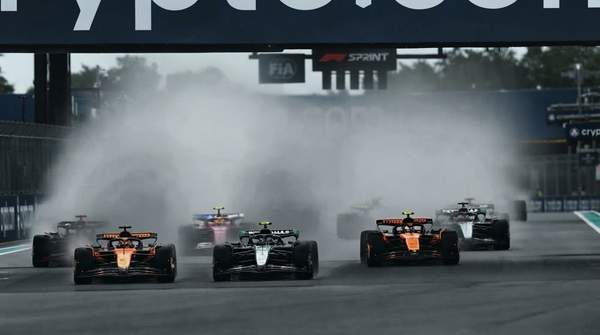
Formula 1 race strategy is a complex and dynamic discipline, where success hinges on a finely tuned plan that adapts to real-time conditions. Since refueling was banned in 2010, tire management has become the central factor dictating how teams approach a Grand Prix, influencing both lap times and critical pit stop decisions. Teams leverage vast amounts of data and sophisticated analytics to optimize tire compound selection, monitor degradation rates, calculate optimal pit windows, and make split-second strategic adjustments during a race.
Pirelli has been the sole tire supplier for Formula 1 since 2011, providing all teams with the exact same range of compounds. This means the competitive advantage comes not from building a superior tire, but from mastering the use of the available compounds better than rivals. Race strategy involves a constant interplay between tire behavior and authentic racing character, often dominating post-race analysis, according to Top Racing Shop.
The Pirelli Tire Palette: Grip, Durability, and Strategic Choices
Every Formula 1 tire features a specific rubber mix, or compound, which determines its grip, lifespan, and optimal operating temperature. For 2026, Pirelli supplies five slick (dry) compounds, labeled C1 (hardest) to C5 (softest), along with wet-weather options. Before each race weekend, Pirelli selects three slick compounds best suited to that specific track's layout and climate. These are then color-coded for easy identification during a race: red for soft, yellow for medium, and white for hard, as explained by Top Racing Shop.
The C5 compound, the softest in Pirelli's range, offers the highest grip but has the shortest lifespan, making it ideal for qualifying runs or circuits with minimal tire wear, according to Sarah Moore Racing. Conversely, the C1 compound is the hardest and most durable, engineered to handle high heat and heavy loads, allowing for longer stints on abrasive tracks. This compound provides lower grip compared to softer options and is typically designated as the "Hard" option for a race weekend, as noted by Pirelli Motorsport.
The C3 compound is highly versatile, striking a good balance between performance and durability. It can serve as the hardest, middle, or softest option in any three-compound selection, performing well across a wide range of conditions. The C4 compound is designed for low-severity circuits, where it warms up quickly to reach peak performance, offering superior grip. Meanwhile, the C2 compound is engineered for extreme durability, working well on faster, hotter, and more abrasive circuits, and is sometimes used on new tracks, according to Pirelli Motorsport and Sarah Moore Racing. The "Hard," "Medium," and "Soft" labels are always relative to the three compounds nominated for a specific Grand Prix.