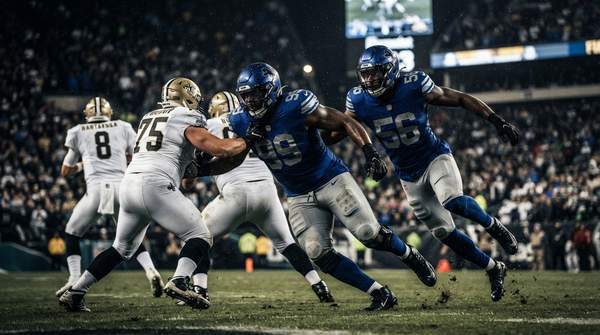
When an offense sends two tight ends or a fullback onto the field, it is not simply telegraphing a run. The real purpose of heavy personnel is to force the defense into a predictable response—and then punish that response, either on the ground or through the air. Here is how the most common heavy packages work, what each one is designed to accomplish, and what to watch for the next time you see one break the huddle.
Understanding NFL Personnel Groupings: The Basics
Personnel groupings are labeled with a two-digit code: the first digit counts running backs, the second counts tight ends, with wide receivers filling the remaining skill spots. So 11 personnel is one back and one tight end, while 12 is one back and two tight ends, and 22 is two backs and two tight ends. Sharp Football Analysis, which tracks personnel usage across all 32 teams, notes that 11 personnel remains the league's default—most teams use it 60 to 80 percent of the time in neutral situations, according to team-tendency data compiled by nfeloapp. "Heavy" simply means any grouping that swaps a receiver for an extra tight end or back, adding bulk at the cost of one fewer downfield threat.
The Core Strategy: Forcing the Defense's Hand
The strategic logic, as explained by the NFL's Next Gen Stats Analytics Team, is that heavier personnel compels defenses into their base alignment with four defensive backs, because coordinators "generally do not want an undersized extra DB to get steamrolled by a tight end or offensive lineman in run defense." That substitution is the trap. If the offense runs, the defense is properly built for it. But if the offense passes out of the heavy set, the base defense is left with "less flexibility to deploy various coverages and less athleticism to effectively contain route runners."
The tactic has grown measurably more common. Next Gen Stats found that heavy personnel induced defenses to play base on 29.7 percent of plays in 2025, after the rate had not exceeded 25 percent in any of the preceding five seasons and had dipped to 20.5 percent in 2023. Offenses ran sub packages with fewer than three receivers on 41.7 percent of plays, above the sub-38-percent average of every season since Next Gen Stats began tracking in 2016. The payoff is real: Sam Darnold posted +52.8 expected points added against base defenses in 2025, the league's best figure, while Drake Maye's +33.5 EPA ranked fifth.