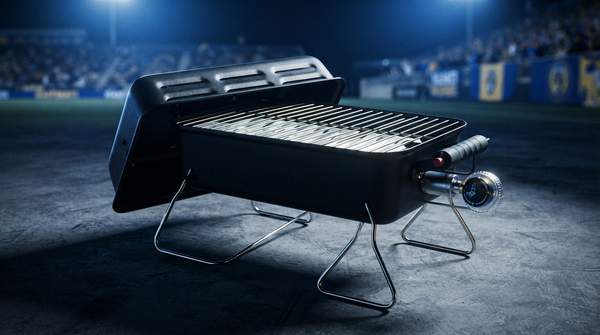
For most tailgaters, propane is the fuel to beat: it lights instantly, controls heat precisely, and cleans up fast enough to get you into the stadium before kickoff. That is the core verdict from grill guides and hands-on testing alike, and it holds even before you pick a specific model. The harder question is which style of propane grill fits your setup—whether you need the full-size, wheeled cooking power of the Weber Traveler or the compact, budget-friendly punch of the tabletop Cuisinart CGG-306. This guide walks through the fuel decision first, then the model trade-off, with a decision matrix to match a grill to your group size, vehicle space, and cleanup tolerance.
Propane, Charcoal, or Pellet: Choosing Your Tailgate Fuel
Start with the constraints of a stadium parking lot, not your backyard. A pellet grill or smoker needs electricity to run its auger and fan, which means hauling an inverter, generator, or a long extension cord—impractical in most game-day setups, as Monument Grills, a grill manufacturer, points out in its tailgating guide. Even a purpose-built portable pellet model like the Traeger Tailgater, with its 429-square-inch cooking surface, still needs a power source, which undercuts its portability where tailgaters actually cook.
Charcoal is the flavor play, but it costs you time and flexibility. The same guide contrasts the fuels directly: charcoal delivers superior smoky flavor and cheaper fuel, but startup is slower, ash disposal is a chore in a parking lot, and open-flame cooking is sometimes restricted by venues. Pellet grills excel at low-and-slow cooking, but they are electricity-dependent and bulkier to transport. Propane, by contrast, offers instant heat, precise burner control, and minimal cleanup—and it is often the only fuel type allowed at venues, making it what that guide calls the safest regulatory bet. Those venue rules vary, so always confirm what your specific stadium lot permits before you buy.
Independent reviewers reach similar conclusions. GearLab, which field-tested portable propane, pellet, electric, and charcoal grills, frames the choice as matching fuel type, heat output, cooking area, and portability features to your typical cooking scenario. Big Horn Outdoors' buying guide likewise recommends compact propane for fast ignition, easy temperature control, and simple cleanup, and notes that routine care—letting the grill cool completely, then cleaning grates and drip pans—keeps any portable unit performing. For game-day tailgaters who value quick searing, predictable heat, and minimal cleanup before heading into the stadium, propane is the default winner.