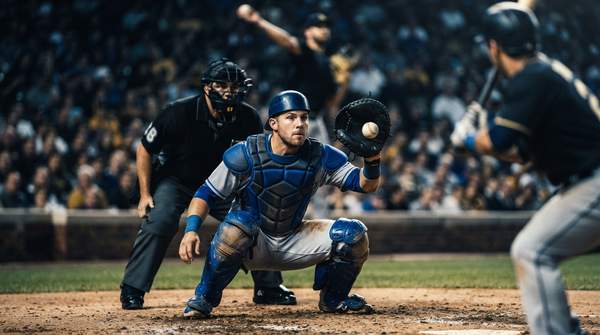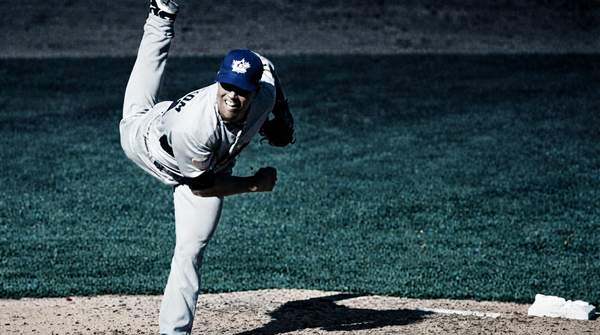
When a big-league pitcher retires a hitter, the final pitch usually gets the credit. The strikeout, the weak groundout, the helpless swing — those are the moments that make the highlight reel. But baseball analytics research suggests the final pitch is often the least independent act of the at-bat. The pitches that came before it did the real work.
Studies of MLB pitch data show that ordering matters as much as selection: a pitcher's sequencing strategy is a distinct component of decision-making, separate from the arsenal itself. A research paper analyzing pitch sequences through directed graph embeddings, presented at the MIT Sloan Sports Analytics Conference, found "compelling quantitative evidence" of setup and knockout pitches in MLB data — meaning earlier pitches in a sequence measurably make later pitches more effective.
The Four Dimensions of Pitch Sequencing Strategy
Understanding what a pitcher is doing starts with recognizing four strategic levers. Velocity, movement, location, and predictability each disrupt a batter in a different way, and elite sequencing usually manipulates several at once.
Velocity is the most familiar. Kyle Boddy, writing for the training company Driveline Baseball, points to perception research showing that a same-handed hitter perceives a pitch thrown up-and-in as up to 10% harder than one thrown low-and-away. Speed, in other words, is not just what the radar gun reads — it is what the hitter's eyes register, and it changes based on where the ball is placed.
Movement works through contrast. An analysis at The Hardball Times found that pitchers who throw both a fastball and a sinker gain an advantage because they can throw a second pitch that looks similar to the first but breaks differently. The hitter may make contact, but he is unlikely to square the ball up. The same analysis found that movement differentials matter in both directions: a curveball after a fastball benefits from a large downward differential, while a change-up after a sinking pitch loses potency because the hitter has already seen a ball moving downward. Cutters and sinkers showed synergy because they sit on a similar horizontal plane at similar speeds — a combination Roy Halladay and Chris Carpenter leaned on heavily.
Location is its own strategic layer. John Z. Clay, a research assistant at the University of Texas at Austin, writing in the Society for American Baseball Research's journal, examined how pitchers use location sequences to retire batters, arguing that sequential pitch behavior is heavily influenced by what came before — within a game, or across at-bats against the same hitter.
Predictability is the subtlest dimension. Clay's model of pitch-by-pitch behavior found that pitchers in the most successful group exhibited situational variance: they pitched stochastically in some situations and predictably in others. Unpredictability alone is not the goal — the skill is knowing when to mix and when to repeat.
The Pitch Sequencing Strategy Framework
Here is the framework in one view. When you watch a sequence unfold, ask which dimension the pitcher is working in.
| Dimension | Pitcher's goal | Effect on the batter |
|---|---|---|
| Varying velocity | Disrupt timing and rhythm between consecutive pitches | Perceived speed shifts; swing arrives early or late |
| Varying movement | Change the ball's trajectory with different spin and break | Contact possible, but hard to square the ball up |
| Varying location | Move pitches around the zone to change eye level and swing plane | Perception of speed shifts by location; swing plane disrupted |
| Varying predictability | Balance stochastic and predictable patterns by situation | Batter cannot reliably guess what comes next |
The framework's analytical power comes from combining it with count management. Driveline's guidance is concrete: watch and take rates rise as the difference between pitch n and pitch n+1 grows, so fastballs inside can set up curveballs, which can then set up sliders. The larger point is that the first three pitches of an at-bat matter most as a group — a pitcher who reaches a 1-2 count has already won most of the battle, regardless of which specific pitches got him there. A two- or three-pitch sequence can usually be read through one or two of these dimensions at once: a fastball up followed by a breaking ball low is a location-plus-velocity play; a sinker followed by a cutter is a movement-and-speed play.
Understanding Setup and Knockout Pitches
The Sloan Sports Analytics Conference paper on directed graph embeddings gives the fan's vocabulary its most useful terms. By interpreting sequence clusters as forward dependencies — meaning earlier pitches in a cluster change the value of later ones — the researchers found quantitative evidence that some pitches function as setups and others as knockouts.
A setup pitch is thrown to manipulate a batter's expectations or positioning for the next pitch. A knockout pitch is the intended out-generating pitch, made more effective by what preceded it. The classic pattern from Driveline's data-driven advice: a fastball thrown up-and-in reads as faster than it is, and that perceived speed compresses the hitter's timing. The curveball that follows — slower, dropping down and away — then arrives against a swing already geared for something else.
Two findings sharpen this picture. First, the same paper found that pitchers display season- and career-level sequencing tendencies but dynamically alter their sequence usage in response to in-game matchups and new information. Setup and knockout patterns are habits, but flexible ones. Second, sequencing is distinct from arsenal: the strategy lives in the ordering, not the pitch inventory. That means a pitcher with a deep repertoire can sequence poorly, and a pitcher with fewer weapons can succeed by presenting the same pitches in varied ways.
Watching the Strategy Unfold: What to Look For
You do not need tracking data to see sequencing in real time. Track the four dimensions pitch by pitch. Did the last fastball come up in the zone? Watch for something soft and low next. Did the hitter just swing over a breaking ball? The follow-up often exploits that same forward weight shift. The location sequence is usually the easiest to read: pitchers working up-and-in early in an at-bat are often building toward something down in the zone later.
Count awareness ties it together. Getting into 1-2 counts is where the knockout opportunities come from — ahead in the count, the batter has to protect, and the pitcher can pick his weapon. That is why the first three pitches of a plate appearance, taken together, matter more than any single pitch being a strike.
Applying Your New Understanding to the Game
The decision for the reader is simple: when watching a game, actively observe how pitchers vary velocity, movement, and location, and try to identify setup pitches that create knockout opportunities. You are not guessing at intent — the quantitative evidence says these forward dependencies exist in MLB data, and the most successful pitchers are the ones who vary their predictability by situation.
The measurable indicator that you have spotted a well-sequenced at-bat is visible without any statistics: a batter's visibly uncomfortable swing, weak contact, or a strikeout on a pitch that looked like it was set up by everything before it. When the hitter's timing is off and his swing path fights the ball's location, you have just watched the framework execute in real time.
Sources
- Decoding MLB Pitch Sequencing Strategies via Directed Graph Embeddings — Sloansportsconference
- Pitch sequencing — The Hardball Times
- Strategic Pitch Location: The Role of Two-Pitch Sequences in Pitching Success – Society for American Baseball Research — SABR
- Choosing the Correct Pitch Sequences: Data-Driven Decisions — Driveline Baseball