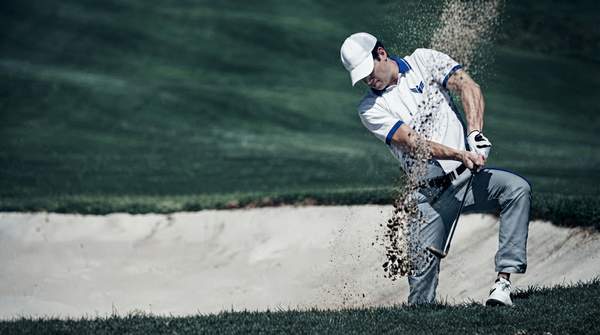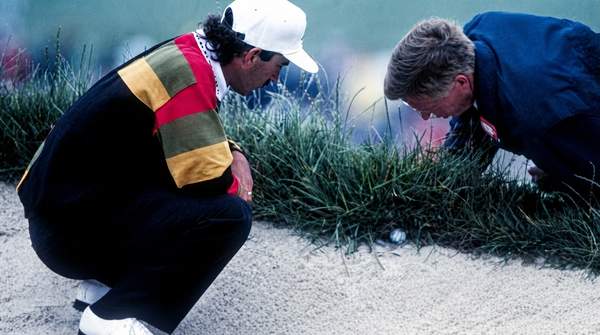
When your ball sits in deep rough, the hybrid is usually the right call. That is the short answer, and it comes straight from how these clubs are built. Hybrids carry a deeper center of gravity and higher MOI, which PXG's fitting guidance says makes them more forgiving and easier to launch from "a variety of lies, including from the rough or even a fairway bunker." The 5-wood belongs on cleaner grass where you need raw distance. The long iron demands precise contact and rewards only players who want a piercing flight and full shot-shaping control. The right choice is situational, and the framework below shows you how to make it quickly.
Understanding Your Options: Long Iron, Hybrid, and 5-Wood
These three clubs often cover the same distance bracket. PXG notes that a 3-iron, a 19-degree hybrid, and a 5-wood can be used "interchangeably depending on desired performance and course condition." They get you similar yardages through very different means.
The hybrid is the versatile one. It is played more like an iron, with a shorter shaft than a fairway wood, which some players find easier to control. The 5-wood is built for power: a longer shaft and larger head designed to generate maximum clubhead speed and ball velocity. The long iron is the traditionalist's tool—compact, demanding, and built for trajectory control rather than forgiveness.
One golfer commenting on a GolfWRX test of this exact question described replacing his 3- and 4-irons with 19- and 22-degree hybrids and finding them "much easier, more forgiving, more height, better stoppage on greens." He even dropped his 4-wood because the 19-degree hybrid went just as far when struck well. That is anecdote, not lab data—but it matches what the design differences predict.
Key Performance Trade-offs: Forgiveness, Ball Flight, and Distance
The trade-offs trace back to physics. A hybrid's deeper center of gravity and improved MOI help the ball get airborne and stay on line even when contact is imperfect. That is why PXG recommends hybrids for "improved forgiveness, higher launch, and versatility." The higher trajectory also means softer landings that hold greens.
The 5-wood's longer shaft and bigger head are optimized for speed, which is exactly what you want from a clean fairway lie and exactly what hurts you in thick grass. Generating maximum clubhead speed requires clean contact, and clean contact is hard to find in deep rough. PXG's guidance is explicit: fairway woods are "a good option for players seeking distance from a good lie in the fairway or from the tee."
Long irons sit at the opposite end. They produce a lower, more penetrating flight with maximum workability, but nothing in their design helps you when the lie is bad. The trade is control for forgiveness—and from rough, that trade usually loses.
Decision Framework: Optimal Club Selection from Difficult Lies
Use this table to cross-reference your lie, your desired ball flight, and your primary goal. The recommendations follow directly from each club's documented characteristics.
| Your situation | Recommended club | Why |
|---|---|---|
| Deep rough, need to escape | Hybrid | Deeper center of gravity and higher MOI handle imperfect contact; higher launch gets the ball up and out |
| Rough or fairway bunker, need forgiveness | Hybrid | Designed for versatility from a variety of lies, including the rough and fairway bunkers |
| Good lie, maximum distance needed | 5-wood | Larger head and longer shaft generate maximum clubhead speed and ball velocity |
| Manageable lie, need low penetrating flight under wind or for position | Long iron | Lower, piercing trajectory and maximum workability |
| Manageable lie, need height and green-stopping power | Hybrid | Higher launch promotes softer landings |
The logic is simple: match the club's strength to the shot's demand. When the lie threatens contact, choose the club that protects against mishits. When the lie is clean and the priority is yards, choose the club built for speed.
Practical Application: Real-World Scenarios
Picture your ball buried in thick rough 190 yards from the green. The 5-wood's large head will snag grass before the ball; the long iron needs perfect contact you cannot guarantee. The hybrid's sole design and weighting are built for exactly this shot—get it out, get it up, accept whatever distance the lie allows.
Now picture a clean fairway lie, 210 yards out, with room to run the ball up. This is 5-wood territory. The lie is good, the priority is distance, and the club's power-oriented design finally works for you instead of against you.
Finally, a tight lie on a windy links hole where you must keep the ball under the tree line and shape it around a corner. If your lie is clean and your ball-striking is reliable, the long iron's penetrating flight and workability are unmatched. But be honest about the lie—if grass will interfere with contact, the hybrid still wins.
Making the Confident Choice: Your Next Shot
For difficult lies, prioritize forgiveness and higher launch with a hybrid, especially from the rough; reserve the 5-wood for better lies requiring maximum distance, and consider a long iron only if precise workability and a penetrating flight are paramount and your lie is manageable. No single club is "best"—the right answer depends on the grass under your ball and the shot the hole demands.
The measurable indicator of success: improved consistency and confidence in club selection from difficult lies, leading to fewer mishits and better scoring. Track it. Next time you face a bad lie, commit to the framework before you pull a club—and watch your mishits from trouble drop.